

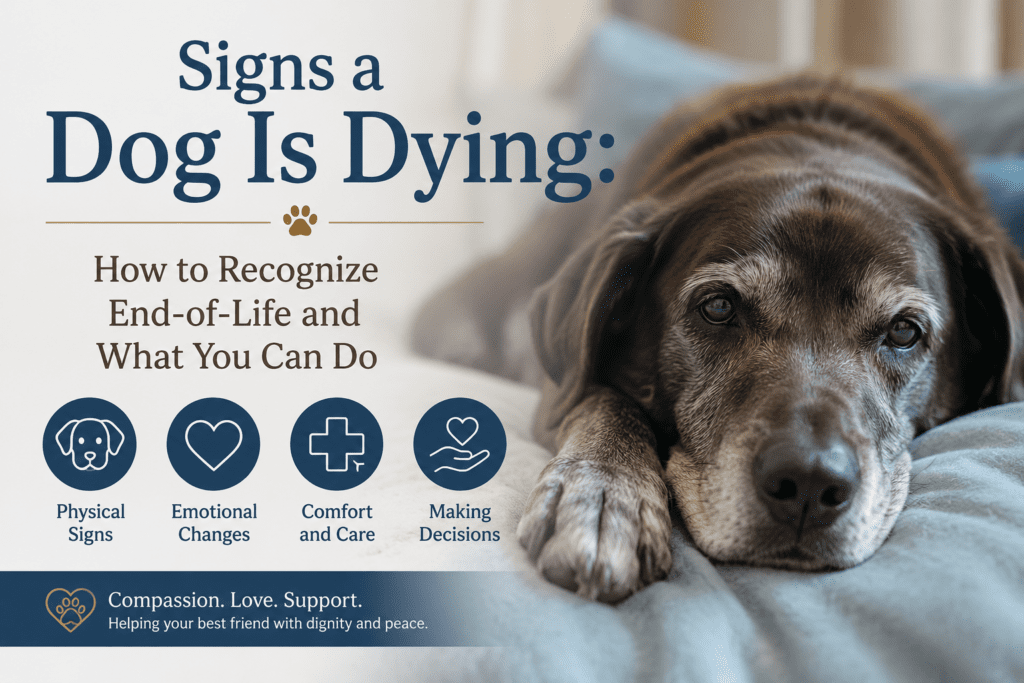
This is one of the hardest topics a pet owner ever has to face. If you’re reading this, you’re probably worried about your dog, and that worry comes from a place of real love. Knowing what to expect when a dog is nearing the end of life doesn’t make it easier emotionally, but it does help you make better decisions and give your dog the comfort she deserves.
Here’s an honest, compassionate guide to the physical and behavioral signs that a dog may be dying, and what you can do to help.

Physical Signs a Dog May Be Nearing the End of Life
Loss of appetite and thirst
One of the earliest and most consistent signs is a loss of interest in food and water. A dying dog’s organ systems begin to slow down, reducing the signals for hunger and thirst. This is a natural part of the process, not starvation.
Extreme lethargy and weakness
You’ll notice your dog sleeping far more than usual and having difficulty getting up, walking, or even lifting her head. Muscle weakness is common as the body conserves what little energy remains.
Labored or irregular breathing
Breathing patterns change significantly near the end of life. You may notice very slow breathing, deep sighs, or periods where breathing seems to stop briefly and then restart. Gurgling sounds sometimes occur in the final hours as fluid accumulates.
Loss of bladder and bowel control
As the nervous system and muscles weaken, a dog may lose control of her bladder and bowels. This is not something she can help, and it’s important not to scold her for it. Keep her comfortable, clean, and dry.
Pale or bluish gums
Healthy dog gums are pink and moist. Pale, white, or bluish-tinged gums indicate poor circulation and oxygen delivery. This is a sign that things are progressing quickly. If you notice this in a dog who hasn’t been diagnosed with a terminal illness, go to the vet immediately.
Body temperature drop
As circulation decreases, a dog’s extremities, particularly the paws and ears, become noticeably cold. A drop in core body temperature below 37°C is another sign that the body is shutting down.
Behavioral Signs to Watch For
Dogs often act differently as they near the end. These changes can be subtle or dramatic.
- Seeking solitude: Many dogs withdraw from family activity and look for quiet, secluded spots.
- Unusual clinginess: Some dogs do the opposite and stay close, seeking comfort from their people.
- Disorientation or confusion: Especially common in dogs with neurological decline or severe organ failure.
- Lack of response to familiar commands, toys, or people they normally react to
- Staring or unresponsiveness for extended periods
Is My Dog in Pain?
This is what most owners worry about most. Dogs don’t express pain the same way humans do. Signs of pain include restlessness, whimpering, changes in breathing, guarding a body part, or unusual aggression. If you think your dog is in pain, talk to your vet. Pain management is an important part of end-of-life care and can make a real difference to her quality of life.
The Question of Euthanasia
This is deeply personal. Euthanasia is a way to prevent suffering when a dog’s quality of life has deteriorated beyond recovery. Your vet can help you assess whether your dog is suffering and whether there are treatment options that might help.
Some questions to discuss with your vet:
- Is my dog in constant pain?
- Can the underlying condition be treated or managed?
- Can she still enjoy the things that mattered to her, food, walks, connection with the family?
- What does her daily quality of life look like right now?
There’s no shame in choosing euthanasia to end suffering. Many vets describe it as a final act of love.
How to Keep Your Dog Comfortable
Whether or not you pursue euthanasia, these steps help ensure your dog is comfortable in her final days:
- Create a soft, warm resting spot in a quiet area.
- Offer water regularly, even if she doesn’t drink much. Wet her lips with a cloth if she can’t drink.
- Speak to her calmly and gently. Many dogs respond to familiar voices even when unresponsive.
- Keep the area clean. Change bedding frequently.
- Minimize unnecessary handling if she seems in pain or distressed.
- Ask your vet about hospice or palliative care options.
— Contact Us —
Contact AlvidPet: Visit AlvidPet.com – Caring for Pets at Every Stage of Life
Alvid Pet is a trusted pet medicine manufacturer in India, dedicated to improving animal health and quality of life at every stage. From puppy wellness to senior dog support, our veterinary products are manufactured with care. Retailers, distributors, and wholesale buyers can explore our full product range at www.alvidpet.com.
Frequently Asked Questions
How do I know if my dog is dying or just very sick?
The key difference is trajectory. A sick dog typically responds to treatment and shows gradual improvement. A dying dog’s condition worsens despite intervention, and multiple systems begin to fail simultaneously. Your vet can give you a clear prognosis.
Do dogs know they are dying?
Research on this is limited, but many behavioral changes suggest dogs sense something is wrong. They may seek comfort, withdraw, or show unusual calm. Whether they understand death as humans do remains unknown.
Should I stay with my dog when she is euthanized?
This is entirely your choice. Many pet owners find it comforting to be present so their dog isn’t alone. Others find it too difficult. Both choices are valid. Talk to your vet about what to expect so you can decide what’s right for you.
How long does the dying process take in dogs?
It varies widely. Some dogs decline over weeks or months due to chronic illness. Others deteriorate rapidly over a few days. The final active dying phase, where breathing changes and consciousness dims, typically lasts hours to a day.