

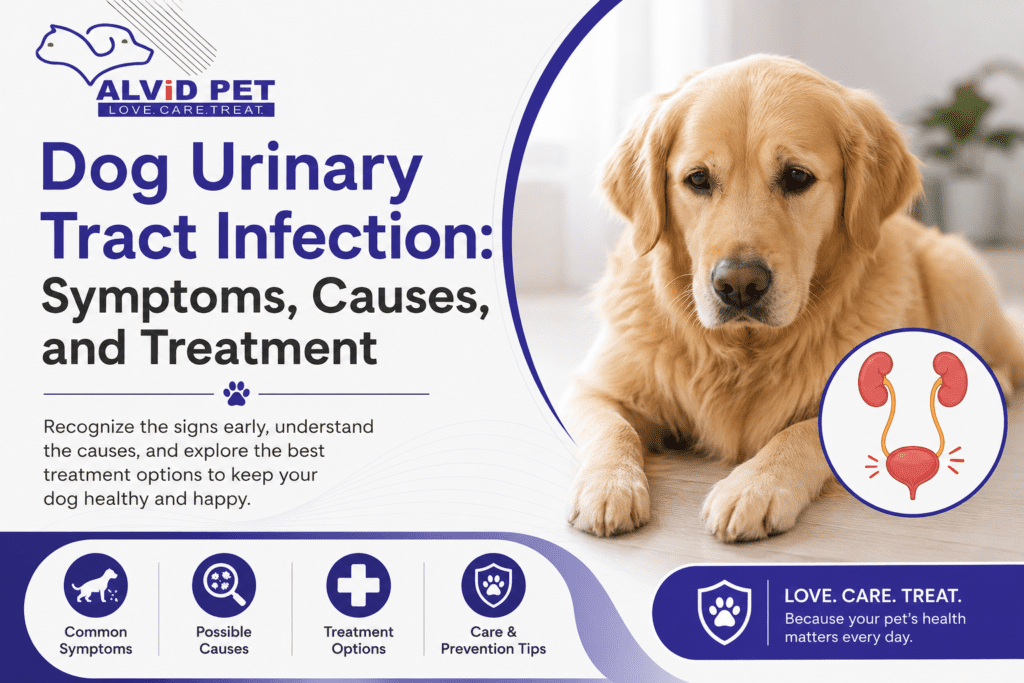
Your dog is squatting and straining but barely anything comes out. Or he’s going to the bathroom more than usual, and you’ve noticed some blood in his urine. These are signs that something’s wrong, and a urinary tract infection (UTI) is one of the most common culprits.
UTIs in dogs are treatable, but you need to catch them early. Left untreated, a simple bladder infection can travel to the kidneys and become a much more serious problem. Here’s what you need to know.
What Is a Dog UTI?
A urinary tract infection in dogs happens when bacteria enter the urethra and multiply in the bladder. It’s more common in female dogs because their urethras are shorter, making it easier for bacteria to travel upward. That said, male dogs get UTIs too, especially older males with prostate issues.
Puppies and senior dogs are also at higher risk. Dogs with underlying health conditions like diabetes or Cushing’s disease are particularly vulnerable because their immune systems are compromised.
Common Symptoms of Dog UTI
The symptoms can vary, but here’s what most pet owners notice first:
- Frequent urination with little output
- Straining or crying out while urinating
- Blood in the urine (pink, red, or brown color)
- Cloudy or bad-smelling urine
- Licking the genital area more than usual
- Accidents inside the house despite being house-trained
- Lethargy or loss of appetite in more severe cases
Some dogs show very few symptoms, which is why regular vet checkups matter. A simple urinalysis can catch an infection before it becomes serious.
What Causes UTIs in Dogs?
The most common cause is bacterial infection, usually from E. coli or Staphylococcus. Bacteria can enter the urinary tract through the dog’s environment, especially if she’s sitting or lying on contaminated surfaces.
Other contributing factors include:
- Bladder stones (which irritate the bladder lining and create a breeding ground for bacteria)
- Structural abnormalities in the urinary tract
- Hormonal imbalances, particularly in spayed female dogs
- Weakened immune system due to illness or stress
- Poor hygiene around the genital area

How Do Vets Diagnose a Dog UTI?
Your vet will start with a urinalysis. This checks for white blood cells, bacteria, and abnormal crystals in the urine. A urine culture is often done alongside this to identify the specific bacteria causing the infection, which helps the vet choose the most effective antibiotic.
If your dog has recurrent UTIs, the vet may recommend an ultrasound or X-ray to check for bladder stones or other structural issues.
How Is a Dog UTI Treated?
Most uncomplicated UTIs respond well to a course of antibiotics. The typical treatment lasts 7 to 14 days. Never stop the antibiotics early even if your dog seems better. Stopping too soon allows bacteria to survive and can lead to a resistant infection.
Your vet may also recommend increased water intake to flush the bladder. In some cases, pain relief medications are prescribed to ease discomfort during urination.
For dogs with chronic or recurrent UTIs, the vet will look at underlying causes and may suggest dietary changes, probiotics, or urinary support supplements.
How to Prevent UTIs in Dogs
- Make sure your dog always has access to fresh, clean water.
- Take your dog out for regular bathroom breaks. Holding urine for long periods allows bacteria to multiply.
- Keep the area around your dog’s genitals clean, especially in female dogs with skin folds.
- Feed a balanced diet that supports urinary health.
- Schedule regular vet checkups, especially for senior dogs or those with known health conditions.
— Contact Us —
Contact AlvidPet: Visit AlvidPet.com – Trusted Pet Medicine Manufacturer in India
Alvid Pet manufactures high-quality veterinary medicines and supplements for dogs across India. If you’re a distributor, retailer, or wholesale buyer, we’d love to partner with you. Visit www.alvidpet.com to explore our product range or get in touch with our team.
Frequently Asked Questions
Can a dog UTI go away on its own?
It’s unlikely. Most UTIs require antibiotics to clear. Without treatment, the infection can spread to the kidneys and become very serious. If you notice UTI symptoms, visit your vet.
Can I give my dog cranberry juice for a UTI?
Human cranberry juice contains too much sugar and isn’t suitable for dogs. Some vets recommend canine-specific cranberry supplements as a preventive measure, but these are not a substitute for antibiotics in an active infection.
How long does it take for a dog UTI to clear up?
With the right antibiotic, most dogs show improvement within 2 to 3 days. The full course typically runs 7 to 14 days. A follow-up urinalysis is often recommended to confirm the infection has cleared.