

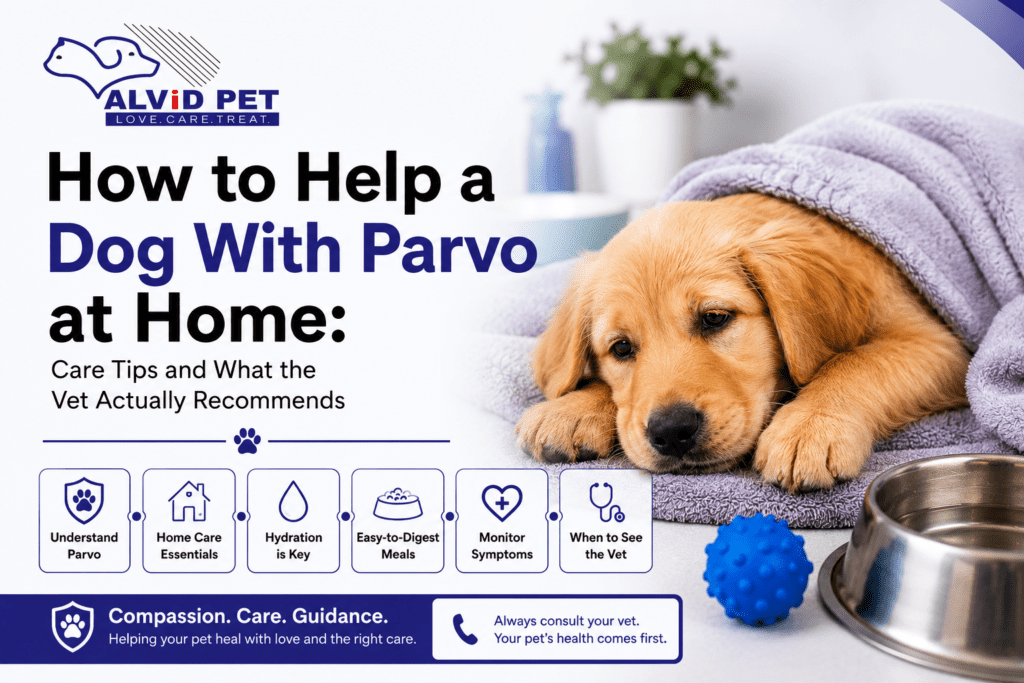
Canine parvovirus is one of the most dangerous viral diseases a young dog can face. It spreads fast, hits hard, and can kill within 48 to 72 hours if it’s not treated. If your dog has been diagnosed with parvo, the most important thing you can do right now is get her to a vet.
But there’s also a lot that happens at home, especially if professional hospitalization isn’t possible or after your dog is discharged. This guide covers what you can do to support recovery, which home remedies are actually useful, and which ones to skip.
What Is Canine Parvovirus?
Parvo is a highly contagious viral infection that primarily attacks the lining of a dog’s small intestine, destroying the cells that absorb nutrients. In puppies, it can also attack the heart. The virus spreads through contact with infected feces and can survive in soil for up to a year. It resists most household cleaners.
Puppies between 6 weeks and 6 months are most vulnerable, especially those who aren’t fully vaccinated. Certain breeds like Rottweilers, Dobermans, and Labrador Retrievers seem to be more susceptible.
Symptoms of Parvo in Dogs
Parvo hits quickly. Symptoms usually appear 3 to 7 days after exposure:
- Severe, often bloody diarrhea with a very strong, foul odor
- Vomiting that won’t stop
- Extreme lethargy
- Refusal to eat or drink
- High fever, or in severe cases, dangerously low temperature
- Rapid weight loss and dehydration
If your dog shows these symptoms, don’t wait. Call your vet immediately. Parvo has a survival rate of around 85-90% with proper veterinary treatment, but that drops dramatically without it.
Veterinary Treatment Is the First Priority
There’s no antiviral medication that kills parvovirus directly. Treatment is supportive, meaning vets work to keep the dog alive while her immune system fights the virus. This typically involves:
- IV fluids to combat severe dehydration
- Anti-nausea medications to stop vomiting
- Antibiotics to prevent secondary bacterial infections
- Nutritional support, sometimes through a feeding tube
- Pain management
Hospitalization often runs 5 to 7 days. This is expensive, and not every family can afford it. In those cases, some vets offer outpatient protocols that involve owner-administered subcutaneous fluids and oral medications at home. Ask your vet explicitly about this option.
What You Can Do at Home During Recovery
If your dog is recovering from parvo at home, under vet guidance, here’s what actually helps:
Keep her hydrated
Dehydration is what kills parvo patients. If she won’t drink on her own, use an oral rehydration solution specifically for dogs. Your vet can prescribe subcutaneous fluid administration if she’s severely dehydrated.
Feed a bland diet
Once vomiting stops and she starts showing interest in food, introduce bland, easily digestible foods. Boiled chicken and plain white rice is the standard recommendation. Feed small amounts every few hours rather than one large meal.
Keep her warm and comfortable
Parvo causes temperature instability. Make sure her resting area is warm, dry, and quiet. Stress slows recovery.
Strict isolation
Parvo is extraordinarily contagious. Keep the sick dog completely separate from any other dogs in the household. Use dedicated food bowls, bedding, and cleanup supplies. Disinfect with a bleach solution (1 part bleach to 30 parts water), which is one of the few cleaners that effectively kills the virus.
Home Remedies: What Works and What Doesn’t
A few things circulate online as parvo cures. Let’s be straight about them.
- Parvaid or herbal supplements: There’s no scientific evidence these work. They won’t hurt, but they won’t replace proper treatment.
- Pedialyte: Can help with mild dehydration if dog-specific options aren’t available, but use the unflavored version and ask your vet about the right amount.
- Fasting during heavy vomiting: This is actually appropriate in the early stages. Don’t force food when she’s actively vomiting.
- Activated charcoal: Not recommended unless prescribed by a vet. It doesn’t help with parvo and can interfere with medication absorption.
Prevention Is Everything
The parvovirus vaccine is extremely effective. Puppies should receive their first vaccine between 6 and 8 weeks of age, with boosters every 3 to 4 weeks until they’re 16 weeks old. Adult dogs need booster shots too.
Until your puppy is fully vaccinated, avoid dog parks, pet stores, and areas where unknown dogs gather.
— Contact Us —
Contact AlvidPet: Visit AlvidPet.com – Veterinary Medicines & Supplements for Dogs
Alvid Pet is a leading pet medicine manufacturer in India. We supply veterinary-grade health products for dogs, including immune support supplements and recovery aids. Contact us at www.alvidpet.com for wholesale, retail, or distribution partnerships.
Frequently Asked Questions
Can a dog survive parvo without veterinary treatment?
Survival without treatment is possible but the odds are poor, around 20-30% for puppies. With proper vet care, survival rates jump to 85-90%. The virus causes rapid, life-threatening dehydration that is very hard to manage without medical support.
How long does parvo last in a dog?
Most dogs who survive parvo recover within 7 to 10 days with treatment. The most critical period is the first 3 to 5 days. Recovered dogs remain infectious for several weeks after symptoms resolve.
Can vaccinated dogs get parvo?
Rarely, but yes. No vaccine is 100% effective, and a puppy that hasn’t completed the full vaccination series has gaps in protection. A fully vaccinated adult dog has very strong immunity against parvo.