

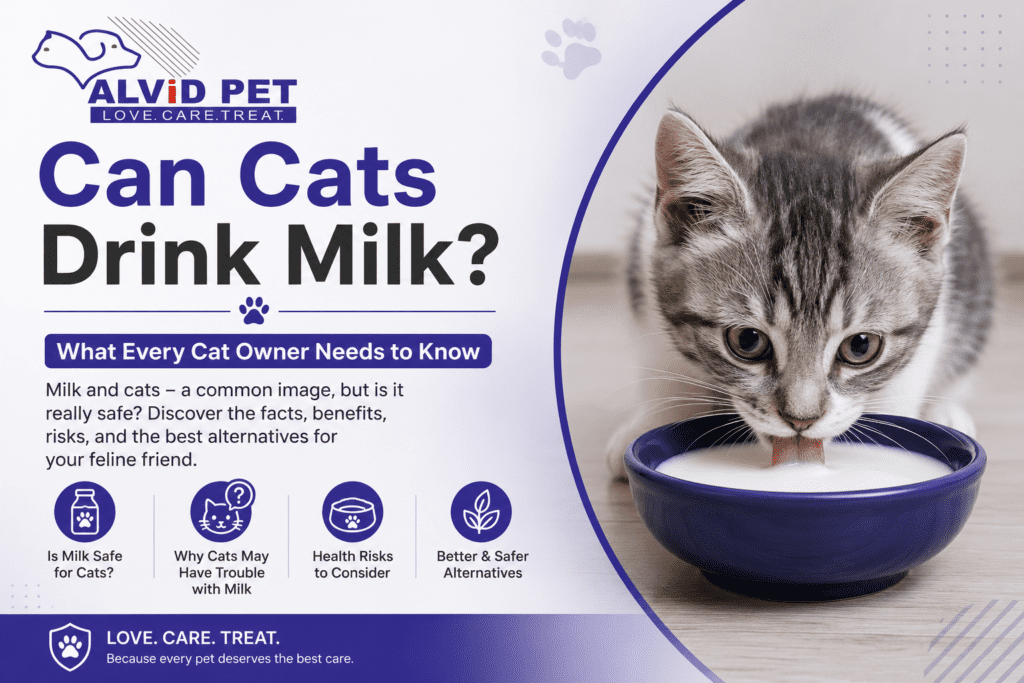
The image of a cat lapping up a saucer of milk is everywhere. In cartoons, in old movies, in children’s books. It feels like a totally natural pairing. But here’s the thing: for most cats, cow’s milk is actually not a great idea.
That doesn’t mean a tiny bit will send your cat to the emergency vet. But it does mean that regularly giving your cat milk can cause real digestive discomfort. Let’s sort out the facts.
Are Cats Lactose Intolerant?
Most adult cats are. When kittens are born, they produce an enzyme called lactase that breaks down lactose, the sugar found in milk. This lets them digest their mother’s milk without any trouble. As they grow into adults, most cats produce far less lactase. Without enough of this enzyme, lactose passes through the digestive system undigested, drawing water into the intestines and causing gas and diarrhea.
This isn’t unique to cats. Many mammals, including most adult humans worldwide, lose the ability to digest lactose efficiently after weaning. It’s the biological norm.
So What Happens If a Cat Drinks Cow’s Milk?
Some cats tolerate small amounts with no visible issues. Others react pretty quickly. The most common symptoms include:
- Diarrhea, often within 8 to 12 hours
- Vomiting
- Bloating or stomach gurgling
- Gas
- General lethargy after a bout of digestive upset
The severity depends on how lactose intolerant your particular cat is and how much milk she consumed. A tiny lick is unlikely to cause major problems. A full saucer? You might be cleaning up after her the next morning.
What About Kittens? Can They Drink Cow’s Milk?
No, and this surprises a lot of people. If you find an orphaned kitten that needs feeding, cow’s milk is not the right substitute for mother’s milk. It doesn’t have the right nutritional profile, and the lactose content can cause severe diarrhea, which can be dangerous in small kittens.
The right option is a kitten milk replacer (KMR), which is specifically formulated to match the nutritional content of a mother cat’s milk. This is available at most pet stores and veterinary clinics. If you’re unsure, call a vet right away.
Are There Safer Dairy Alternatives for Cats?
Some pet stores sell lactose-free cat milk, which has had the lactose removed or reduced. This is generally safer than regular cow’s milk, but it’s still a treat rather than a dietary staple. It doesn’t provide much nutritional value that your cat isn’t already getting from a balanced diet.
Cats are obligate carnivores. Their nutritional needs center around protein and specific amino acids like taurine. Dairy just doesn’t fit into that equation as a meaningful food source.
What Should Cats Drink Instead?
Fresh, clean water. That’s the honest answer. Adequate hydration is one of the most important factors in cat health. Cats are notoriously poor water drinkers when left to their own devices, especially if they eat mostly dry food.
Here are some ways to encourage your cat to drink more water:
- Use a cat water fountain. Moving water is more appealing to many cats.
- Place water bowls in multiple locations around the house.
- Switch to wet food or add water to dry kibble to increase moisture intake.
- Keep the water bowl away from the food bowl. Cats in the wild don’t find water near prey.
When to Call a Vet
If your cat drank a significant amount of milk and is now showing symptoms like persistent vomiting, bloody diarrhea, or extreme lethargy, contact your vet. A single episode of loose stool is unlikely to be an emergency, but repeated symptoms or signs of dehydration warrant professional attention.
— Contact Us —
Contact AlvidPet: Visit AlvidPet.com – Quality Veterinary Products for Cats & Dogs
Alvid Pet is a trusted pet medicine manufacturer in India supplying digestive supplements, vitamins, and veterinary health products for cats and dogs. Retailers, distributors, and wholesale buyers are welcome. Get in touch at www.alvidpet.com.
Frequently Asked Questions
Can cats drink almond or oat milk?
These are lower in lactose, but they’re not recommended either. Most plant-based milks contain sweeteners, added flavors, or ingredients that aren’t suitable for cats. Water remains the safest and healthiest drink.
My cat begs for milk. Why?
Cats are attracted to the fat content in milk, not the lactose. The smell and taste of fatty liquids is appealing to them even if their digestive system doesn’t handle lactose well. Wanting something and tolerating it well are two different things.
Is cheese or yogurt safe for cats?
These contain less lactose than liquid milk because some of it breaks down during fermentation or aging. A tiny amount of plain yogurt or hard cheese is unlikely to cause issues in most cats, but they offer no nutritional benefit worth the digestive risk.