

Cats are mysterious creatures, and their drinking habits often leave owners concerned. You may wonder: why won’t my cat drink water? Is it normal, or could it signal a health issue? Since hydration is vital for your cat’s well-being, it’s important to know how much water should a cat drink a day, what the signs and symptoms of dehydration in cat look like, and how to hydrate a cat that won’t drink water.
This guide explores why cats avoid water, the dangers of dehydration, and effective methods for how to get my cat drink more water and how to overcome dehydration in cat.
How Much Water Should a Cat Drink a Day?
A healthy adult cat typically needs around 50–60 milliliters of water per kilogram of body weight daily. For example:
- A 4 kg (8.8 lb) cat should drink about 200–240 ml (just under a cup).
- A 5 kg (11 lb) cat should drink 250–300 ml daily.
However, this amount includes moisture from food. Cats on dry kibble require more water from a bowl, while cats fed wet food may naturally drink less. If your cat isn’t reaching its daily needs, dehydration risks increase.
Why Won’t My Cat Drink Water?
There are several reasons cats refuse water:
- Instinctual behavior – Cats evolved in desert environments where they derived most hydration from prey, so they naturally have a low thirst drive.
- Food type – Cats eating canned or raw diets get water from their food, reducing the urge to drink.
- Bowl issues – Cats dislike narrow, deep bowls that press against their whiskers.
- Water source – Stagnant or warm water may discourage drinking. Cats prefer fresh, moving water.
- Location – Cats often avoid bowls placed near litter boxes or in high-traffic areas.
- Health concerns – Dental disease, kidney issues, urinary tract infections, or pain can all affect water intake.
Understanding the cause is the first step to learning how to hydrate a cat that won’t drink water.
Signs and Symptoms of Dehydration in Cat
Spotting dehydration early is critical. The main signs and symptoms of dehydration in cat include:
- Dry or tacky gums instead of moist ones.
- Skin tenting: gently pinch the skin between the shoulder blades—if it doesn’t snap back quickly, dehydration is present.
- Sunken eyes or dull appearance.
- Lethargy or unusual tiredness.
- Loss of appetite.
- Panting or rapid breathing.
These indicators reveal when it’s time to step in and figure out how to overcome dehydration in cat before it leads to kidney problems or organ failure.
How to Get My Cat Drink More Water
Encouraging your cat to drink may take creativity.
Practical tips:
- Use wide, shallow bowls – These prevent whisker stress and make drinking more comfortable.
- Add multiple water stations – Place bowls in different rooms to make drinking convenient.
- Provide fresh water daily – Cats prefer clean, cool water. Refresh bowls at least twice a day.
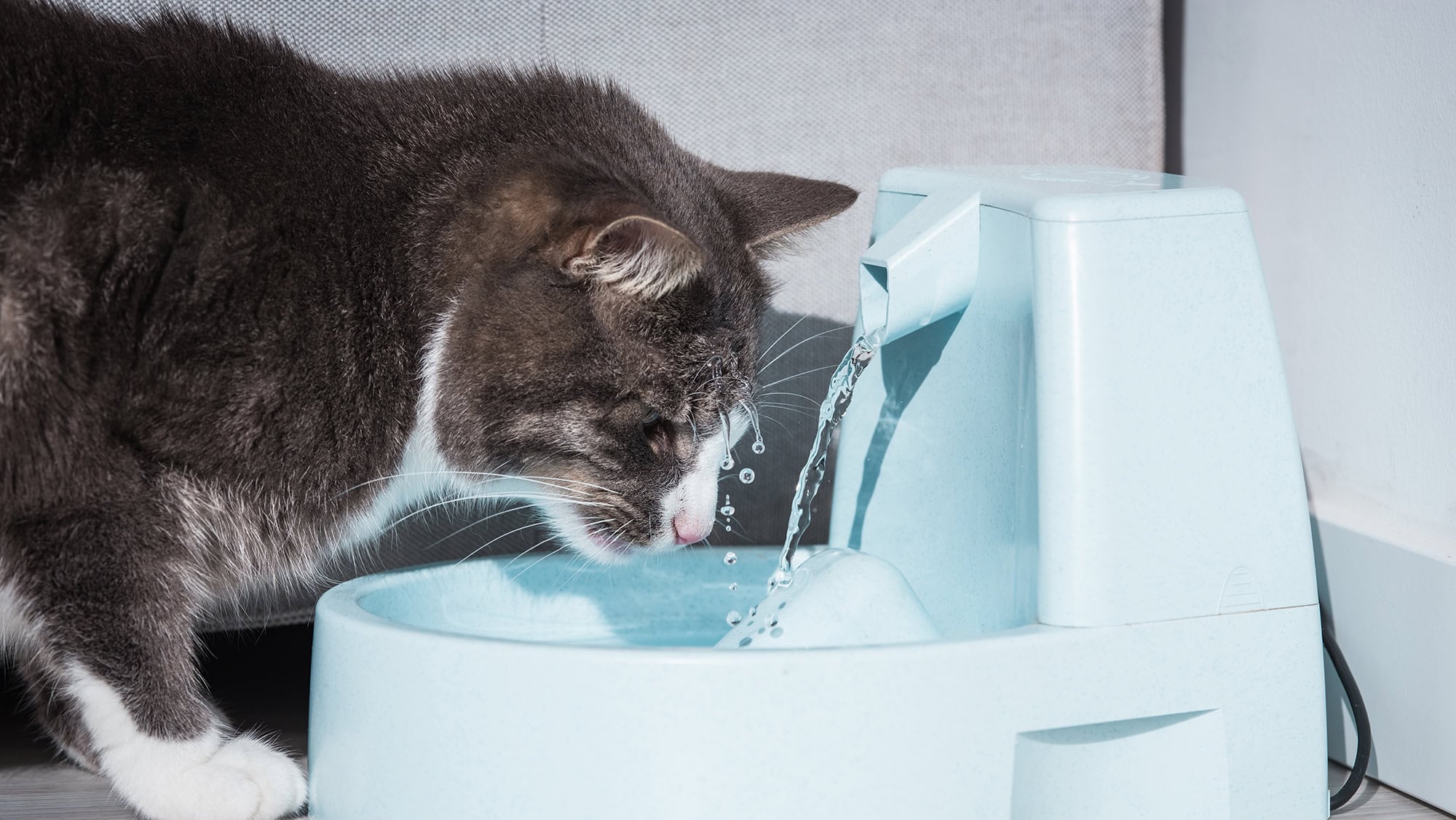
- Try cat water fountains – Many cats are fascinated by moving water. Flowing fountains mimic natural streams.
- Flavor the water – Add a splash of tuna juice, low-sodium chicken broth, or bone broth to make water more enticing.
- Experiment with bowl material – Some cats dislike plastic. Stainless steel, ceramic, or glass bowls are often preferred.
- Keep bowls away from food and litter – Cats instinctively avoid water sources near waste or strong-smelling food.
These strategies answer the question of how to get my cat drink more water without stress.
How to Hydrate a Cat That Won’t Drink Water
If your cat is stubborn about drinking, you’ll need other methods:
- Wet food: Switch to canned food, which is up to 80% water. Even mixing some with dry food helps.
- Add water to meals: Slowly increase the amount of water or broth in your cat’s food.
- Ice cubes: Some cats like batting at or licking ice cubes in their bowls.
- Syringe feeding water: If your cat is very dehydrated and refuses food, use a syringe to give small amounts of water (unless advised otherwise by a vet).
- Electrolyte solutions: Only under veterinary guidance, cat-safe oral solutions may be recommended.
These solutions are direct approaches for how to hydrate a cat that won’t drink water.
How to Overcome Dehydration in Cat
Mild dehydration can often be managed at home by increasing water intake. But in moderate to severe cases, professional veterinary care is essential. Here’s how:
- At-home solutions: Increase wet food, offer flavored water, or use fountains.
- Veterinary treatment: Cats with significant dehydration may need subcutaneous fluids (under the skin) or intravenous fluids.
- Addressing underlying conditions: If the dehydration is due to illness, such as kidney disease or urinary problems, treating the root cause is the only way to ensure long-term recovery.
Knowing how to overcome dehydration in cat could save your pet’s life, as dehydration can quickly spiral into life-threatening complications.
Preventing Dehydration in Cats
Prevention is always better than treatment. Here’s how to keep your cat properly hydrated:
- Offer a mix of wet and dry food.
- Provide multiple, clean water sources around the home.
- Encourage playful interaction with water (like dripping faucets).
- Monitor water intake daily.
- Schedule regular veterinary checkups to detect early signs of kidney or urinary problems.
By adopting these habits, you’ll reduce the chances of dehydration becoming a recurring issue.
When to Seek Veterinary Help
Sometimes home strategies aren’t enough. Contact your vet immediately if your cat shows:
- Refusal to eat or drink for over 24 hours.
- Persistent vomiting or diarrhea.
- Severe lethargy.
- Repeated signs of dehydration despite your efforts.
Professional care is critical for ensuring your cat doesn’t face long-term damage from dehydration.
Conclusion
Cats often drink less water than we expect, but prolonged avoidance can lead to dangerous dehydration. By understanding how much water should a cat drink a day, asking why won’t my cat drink water, and learning how to get my cat drink more water, you can help your feline companion stay healthy. Recognizing the signs and symptoms of dehydration in cat allows you to act quickly, and knowing how to hydrate a cat that won’t drink water and how to overcome dehydration in cat ensures you’re prepared to protect your pet.
For more guidance, reliable resources, and compassionate support, trust Alvid Pet to help you care for your cat’s health every step of the way.